In 2012 I had the pleasure of reporting from The North Face Ultra Trail du Mont Blanc following The North Face athlete Jez Bragg around the course as he attempted to repeat his 2010 win. (Link to blog). In 2013 I'll be back but to attempt the CCC, a shorter version of the main event featuring a 100km route from Courmayer to Chamonix via Champex with 5950m of ascent
Showing posts with label Equipment. Show all posts

Sunday, 8 September 2013

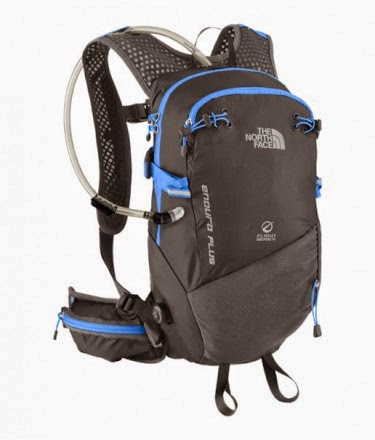
Enduro Plus Hydration Pack Review

I've used the great looking Enduro Plus Hydration Pack from The North Face for my last two ultras. It only arrived two days before the Lakeland 100 where it did a great job through 38 hours of effort. I then took it to Chamonix for the 60 mile CCC where it again behaved flawlessly.

It's a very short and squat design that sits low on my back and does look a bit strange when fully laden. However it is incredibly comfortable and I've had no issues with chafage or the pack bouncing. My back bears permanent scars from racing with packs with a longer back length but in 165 miles of racing in extremes of heat and 'dampness' I've not had a single problem.

Finishing a soggy Lakeland 100 with the low sitting Enduro Plus under my waterproof

I like my comforts so had it stashed pretty full for both races but with a bit of work its 9.5 litres should accommodate a very lightweight mountain marathon set up. its just a wee bit small for working in the mountains (bothy bag, first aid kit, spare jacket etc) but I'm finding it ideal for most of my own running and cycling adventures 

For me the Boa anti slosh tightening system to secure and compress the water bladder worked as it should but solves a problem that doesn't really exist. Certainly the water bouncing and sloshing about is not something I've ever worried about in any other pack as expelling the air before sealing the reservoir also does a pretty good job. The wire and dial system adds weight and complexity and I had a few issues on the Lakeland 100 when with cold and wet hands kit was snagging on the exposed wires.


I used the mesh pocket on the back for a water bottle on the Lakeland 100 and for my windproof on the CCC and it worked very well being easy to locate with a bit of practice. I find the side pockets on some race packs, which are placed up towards your arm pits, rub against my arms when I'm running but are awkwardly placed when trying to grab a drink or replace your bottle. Placing this feature on the back of the pack makes far more sense ergonomically. On this pack some form of closure would be useful for when carrying gloves, arm warmers etc and a second staggered holder would also be an interesting development.


The included water bladder was very good with a two litre capacity and a large opening. The valve was about average in terms of water flow but it didn't feel like hard work to suck even when working hard and the nifty little magnetic holder for the tube is a great innovation and worked incredibly well. If it's a faff to drink while racing then you won't so little design features like this work incredibly well in the real world. I'm not usually a fan of racing in the heat but coped surprisingly well on the first day of the CCC remaining well hydrated throughout which I can probably attribute to this pack.

The website mentions stash pockets on the chest harness but I think they meant on the waist belt which features two spacious pockets. The lightweight floating harness did get twisted when putting the bag on but once everything was secured then the pockets were perfectly positioned and a pretty good size. An internal loop in th epockets for clipping compasses / GPS would be a welcome development.

The fashion is currently very much for race vests but if you are looking to carry a bit more equipment and like a more traditional pack with some very modern features then the Enduro Plus is certainly worth a look.

Wednesday, 28 August 2013

Jez Bragg - back for his favorite race!


The North Face athlete Jez Bragg is no stranger to the UTMB. A win in 2010 put his name in the history books and he's back this year to continue his special relationship with the event. His running hit the news earlier in 2013 when he ran the length of New Zealand. The 3054km Te Araroa trail took him just 53 days. His latest blog entry details his recovery from this epic and the challenge of learning to run and race again. Jez kindly took time out of his final preparations in Chamonix to answer a few questions. Best of luck and blue skys to the whole Bragg team!

What's your history with the UTMB?
I ran my first UTMB race back in 2005 and I've been hooked ever since. It has a unique course, a unique atmosphere and a unique level of difficulty! The UTMB course holds some my fondest trail racing memories - notably a win on the shortened course in 2010 - and also some of my worst memories - like having to withdraw from the race in 2011 after suffering a chest infection. I love it every I time I step foot on the course, whether it be in training or during the race. Sunrise after a tough night running through rain and snow in 2011 was very special.

What's your favorite section of the course?
The section from Refuge Bertone to Refuge Bonatti is always amazing, although it will be in the dark this year with the earlier start time. The cruisy descent from the top of the Grand Col all the way down to Praz du Fort is also pretty cool. The trick is being in a position to really run those latter sections well to achieve a solid finish time.

What are your top 3 bits of advice for first timers?
(i) Run your own race - don't get carried away with the razzmatazz of the start and go off too quickly.
(ii) Plan your nutrition carefully. The food on the aid stations is different to what the Brits might be used to - so I plan to have my own food available along the way.
(iii) Save yourself for the second half. Many people drop at Cormayeur - there's plenty of fast running to be enjoyed beyond there - so keep something back/ left in the tank.

It's very sociable at the back of the field! Is there much talking among the elite competitors?
Not really to be honest. Quite often there is a language barrier, but everyone's usually working too hard, or too focused, to speak. 

Do you have any mental strategy for digging yourself out of the inevitable holes/lows?
Peaks and troughs. You will go through spells of feeling rough, but if you can get yourself through the other side, invariably there will be a high to be enjoyed on the other side. Also think about why you may have slumped? Low blood sugars, dehydrated, feeling sorry for yourself...? Then correct it!

What's your key piece of TNF kit for this race?
Stormy Trail jacket and pants - super lightweight and packable, but incredibly protective in wet weather. 

Are you a fan of technology - iPods, HR monitors, GPS watches etc?
Mmmm. Yes and no. I will be taking an iPod shuffle with me this year to help get me through the rough spells, and also a my Garmin Fenix to help with speed, pacing and monitoring altitude. I try not to be too reliant on technology but it has to be done in part.

What's your key nutrition for races like the UTMB?
A mixture of gels, flapjacks, chocolate, rice pudding, and probably the odd expedition type meal (dehydrated) if I can stomach it.

Will your New Zealand experiences help your racing?
I hope so - certainly mentally! This is my first competitive long race since the expedition and I'm excited to see how my recovery and training has gone. I'm feeling very positive after a great summer of training, but in reality I won't know until I'm half way round. I definitely learned a lot about myself in NZ, both mentally and physically, and I will always be able to draw strength from those experiences.

Tuesday, 27 August 2013

UTMB Kit


As is usual in ultra running the organisers of the UTMB specify a minimal kit list. In fact the last three events have been seriously affected my poor weather with snow featuring regularly so it pays to be prepared. The list below is the mandatory list with my notes in italics
  • Mobile phone
  • Personal cup or tumbler 15cl minimum
  • Stock of water minimum 1 litre - carried in a 2 litre bladder
  • Two torches in good working condition with replacement batteries - Silva Runner with a Petzl Tikka 2 as back up
  • Survival blanket 1.40m x 2m minimum - For extra protection I carry a Sol Emergency Bivi
  • Whistle - Built into one of my rucksack buckles
  • Adhesive elastic band enable making a bandage or a strapping (mini 100cm x 6 cm) - Support bandage, zinc oxide tape and Compeed usually sees me through
  • Food reserve - A block of marzipan which lives in the bottom of my bag!
  • Jacket with hood and made with a waterproof and breathable membrane which will withstand the bad weather in the mountains - I'm carrying a slightly heavier Alpine Project shell from The North Face which offers a huge amount of protection for its weight.
  • Long running trousers or leggings or a combination of leggings and long socks which cover the legs completely - A combination of compression socks and Capri tights
  • Additional warm midlayer top: One single midlayer long sleeve top for warmth (cotton excluded) with a minimum weight of 180g (Men, size M) OR a two piece clothing combination of a long sleeve baselayer/midlayer for warmth (cotton excluded) with a minimum weight of 110g (Men, size M) and a windproof jacket* with DWR (Durable Water Repellent) protection - I've gone for the flexible option of a The North Face Alpine Project Wind Jacket (discontinued) and a merino thermal base layer
  • Cap or bandana - TNF cap plus a buff.
  • Warm hat - Woolly and logo'd from a well known outdoor brand!
  • Warm and waterproof gloves - A combination of thermal and waterproof work gloves
  • Waterproof over-trousers - The North Face AK Stormy Trail Pants
Other equipment I'll be using includes;
  • Rucksack - My current bag is The North Face Enduro Plus but I will be trialing one of their new race vests designed with the help of Jez Bragg
 
  • Trail shoes - La Sportiva Raptors, a very rugged and comfortable pair of trail shoes which fit my feet well. However they have slightly too much raise for my developing natural running style and I'm prone to injury when using them. Time to look for a new ultra shoe after this race.
  • Trekking poles - Being one of the heavier runners in the field I tend to use my full weight Black Diamond expedition poles which I also use for ski mountaineering! They are obviously significantly heavier than pure running poles but it does mean I can be pretty aggressive with them and they have a huge benefit on my performance.
  • Map and compass - You can't take the mountaineer out of the runner!